
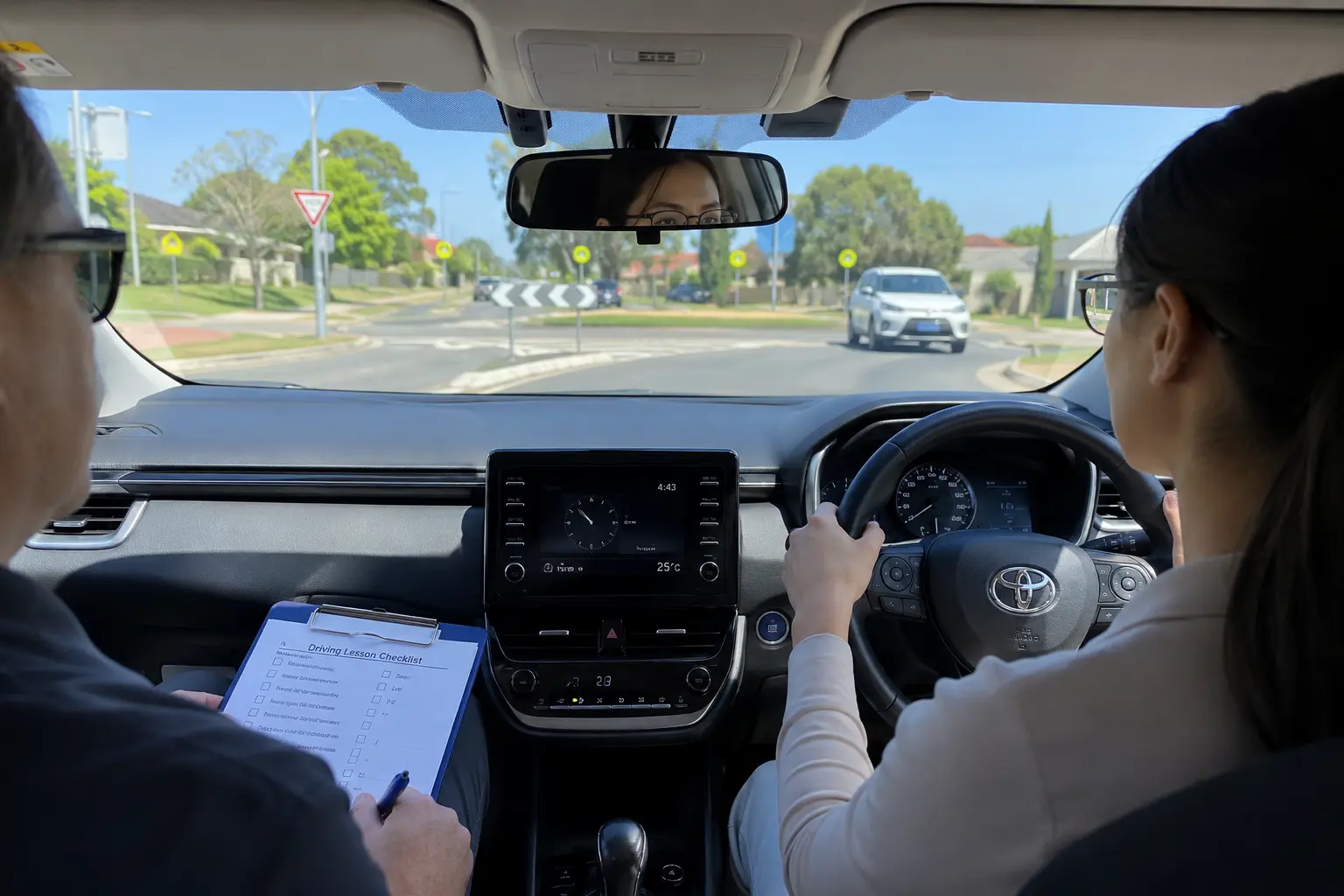
Common driving test mistakes that NSW learners often make have nothing to do with skill. In fact, most learners who fail their test already know how to drive safely. What trips them up is nerves, small habits, and a handful of avoidable slip-ups that examiners are trained to catch instantly. If you are booked in for your test soon, this guide breaks down the seven mistakes that cost learners their pass, why each one happens, and exactly how to fix it before you get behind the wheel on test day.
Why Do So Many Learners Fail Over Small Errors?
Firstly, it helps to understand how NSW driving tests are scored. Examiners are not just watching whether you can steer and stop. They are assessing whether you drive like someone ready to be trusted alone on the road. As a result, small errors such as forgetting a head check or hesitating at a give-way sign carry more weight than most learners expect. Therefore, knowing the pattern behind common driving test mistakes NSW examiners flag most often is the fastest way to avoid repeating them.
1. Rolling Stops at Stop Signs
Many learners slow down at a stop sign instead of coming to a complete, three-second stop. This happens because learners get used to “give way” behaviour and blur the two together under pressure. To fix this, practise saying “one, two, three” in your head every time you stop, even during ordinary lessons. This builds the habit so it becomes automatic on test day.
2. Forgetting Head Checks Before Changing Lanes
Head checks are one of the most heavily weighted items on the test. Learners often rely on mirrors alone, especially when nervous, which can result in an instant fail if a blind spot check is missed. Consequently, instructors recommend exaggerating the head turn slightly during practice so the examiner can clearly see it, rather than relying on a glance.
3. Poor Speed Control on Approach to Turns
Approaching a turn too fast and braking sharply at the last second is a frequent fail item. This usually happens because learners focus on the turn itself rather than the 50 metres leading up to it. A simple fix is to start slowing early and settle into the correct speed well before reaching the intersection, so the turn itself feels unhurried.
4. Hesitating at Roundabouts
Roundabouts cause more anxiety than almost any other manoeuvre, and hesitation often leads to stalling traffic flow or misjudging a gap. This is usually a confidence issue rather than a knowledge gap. Practising the same roundabout repeatedly with an instructor, in both light and heavy traffic, helps build the timing needed to commit to a gap smoothly.
5. Incorrect Lane Positioning
Drifting toward the centre line or hugging the gutter is a subtle but common driving testmistakes NSW instructors see across almost every test route. It often stems from learners fixating on the car ahead rather than scanning farther down the road. Looking further ahead naturally corrects lane position because the body tends to steer where the eyes are looking.
6. Missing Documentation on the Day
It might sound simple, but arriving without the correct logbook, identification, or a roadworthy vehicle is an automatic test cancellation. This mistake has nothing to do with driving ability, yet it ends more tests than any technical error. Preparing all paperwork the night before, not the morning of, removes this risk entirely.
7. Letting Nerves Take Over
Finally, and perhaps most importantly, anxiety itself causes many of the mistakes above. When learners tense up, reaction time slows, and habits that were solid in practice start to slip. Booking a shortwarm-upp lesson on the morning of the test, rather than driving in cold, gives nerves time to settle before the real thing begins.
How to Prepare So None of These Happen to You
Overall, the pattern is clear. Most learners are not failing because they cannot drive. They are failing because pressure exposes small gaps that everyday practice does not always reveal. On the other hand, structured mock tests that simulate real exam conditions close that gap quickly, because they train both the manoeuvre and the composure needed to perform it under scrutiny. If you are still building your hours, our affordable lesson packages include dedicated test route practice and observation training so nothing catches you out on the day either.
Frequently Asked Questions About NSW Driving Test Mistakes
What is the most common reason learners fail their NSW driving test?
Missed head checks and rolling stops are consistently the two most common driving test mistakes NSW examiners report, largely because both happen quickly and are easy to overlook under pressure.
Can I fail for a mistake that does not cause an accident?
Yes, NSW driving tests mark on correct procedure, not just outcome. A missed head check or incomplete stop can result in a fail even if no other vehicle was affected.
How many mock tests should I do before the real one?
Most instructors recommend at least two to three full mock tests in the two weeks before your test, ideally on or near the actual test route.
Does nervousness affect the test result?
Indirectly, yes. Nerves do not get marked directly, but they often cause the hesitation, missed checks, and speed errors that do get marked.
In summary, none of these seven mistakes require natural talent to fix. Each one comes down to a specific habit that a few focused practice sessions can correct. Book a lesson or two with a licensed instructor in the weeks before your test, target these exact issues, and you will walk in on test day with far more confidence than most learners have. For the full official breakdown of what examiners assess, refer to the Service NSW driving test guide before your test date.